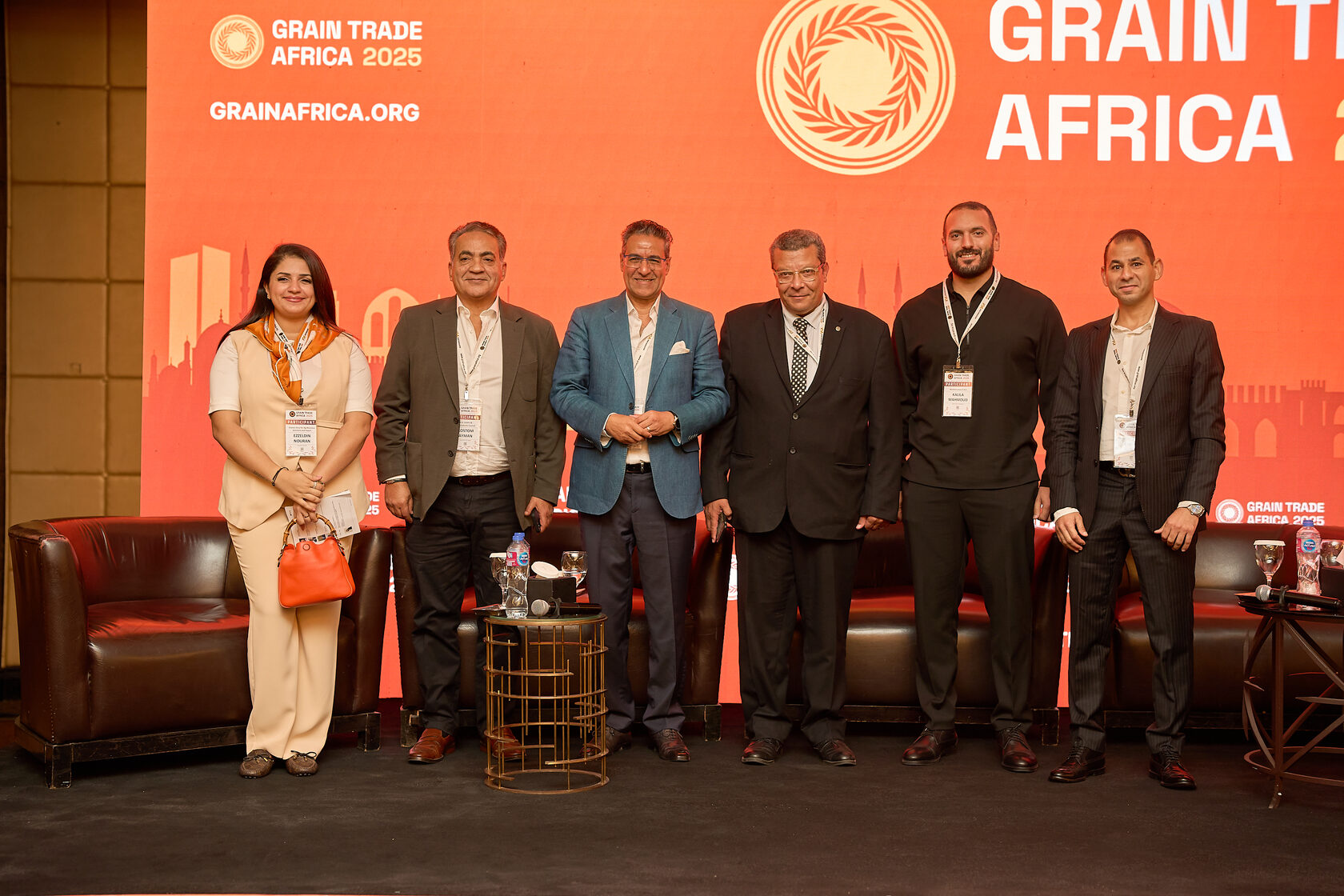
Africa, Grain and New Trade Routes: Highlights from Grain Trade Africa 2025 in Cairo
On October 7–8, 2025, Cairo hosted the international Grain Trade Africa 2025 forum, bringing together leading grain traders, exporters, millers, and logistics experts from across the world.
The central theme of the discussions was Africa’s role in the global grain market, and how the continent can strengthen its food security amid growing challenges.
Africa — Between Harvest and Dependency
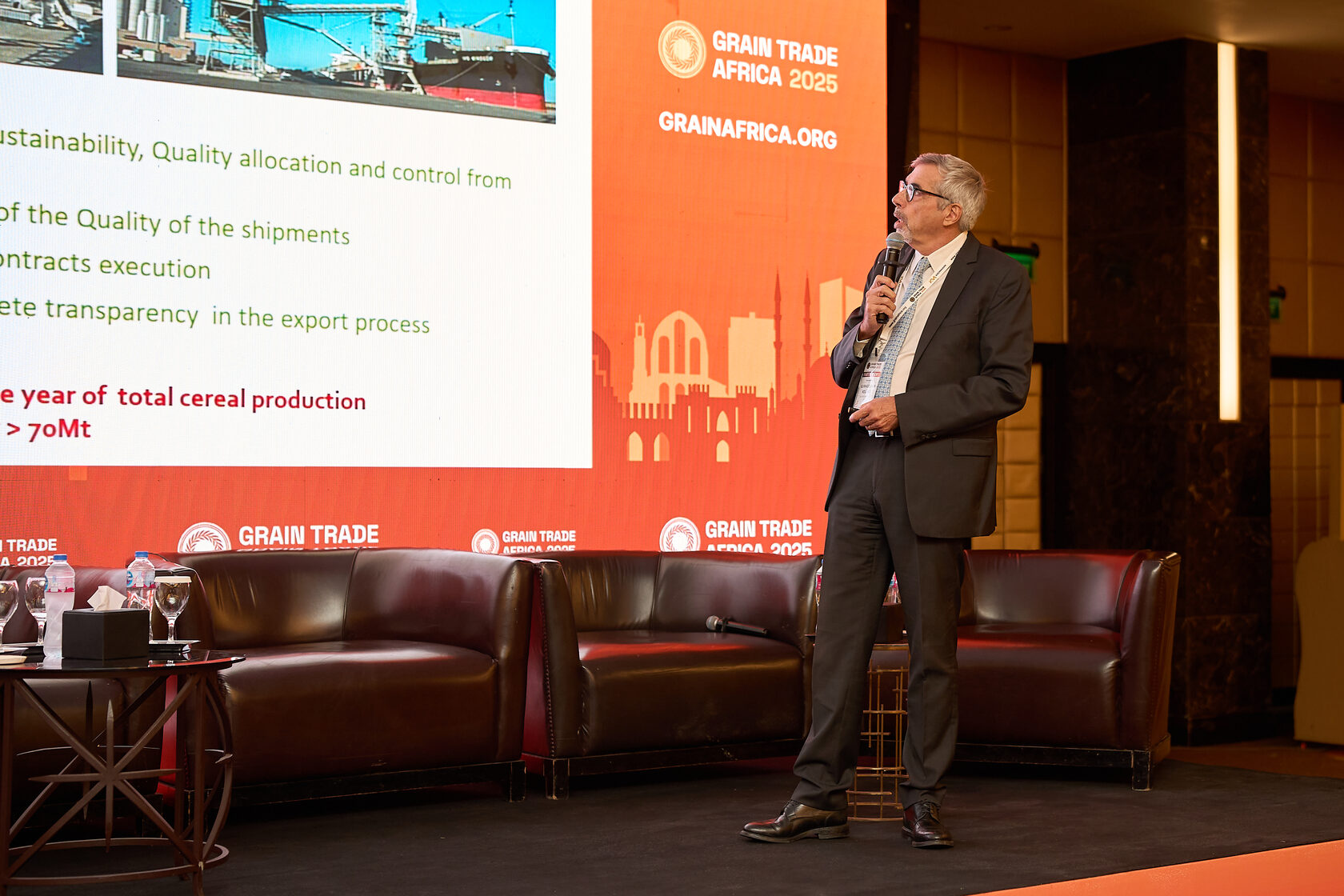
Aymen Rostom, representing the Commercial International Bank (CIB), emphasized that the gap between grain production and consumption in Africa now exceeds 70 million tonnes. The continent’s import dependency is becoming critical, leaving it exposed to global price volatility.
Independent milling industry expert Fabien Varagnac analyzed the rise in wheat consumption across Sub-Saharan Africa — up by 10 million tonnes over the last decade. With imports covering nearly 80% of demand, the region’s flour milling sector is consolidating rapidly, and port logistics has become the key competitive factor.
France, Russia and Türkiye — Balancing the Grain Flows
Roland Guiragossian, representing Intercereales (France), reported that France expects a strong wheat harvest in 2025, supported by favorable weather, improved yields, and increased planting areas. The country remains one of the leading global wheat exporters with a robust grain supply chain.
Mikhail Matveenko, Head of Export at EkoNiva (Russia), projected a record pulse harvest of up to 7 million tonnes and grain export growth to 4 million tonnes in the 2025/26 season, reinforcing Russia’s key position in the Black Sea grain trade.
Evgeniya Dudinova, Raw Materials Procurement Director at Agthia Group (UAE), noted that harvest delays in the Black Sea region caused a temporary barley shortage, while China and Jordan’s grain imports could push feed grain prices higher.
Ibrahim Demirayak, CEO of DELWAY DMCC (Türkiye), highlighted Türkiye’s unique position as both a major importer and exporter. Despite its reliance on imports, Türkiye remains one of the world’s top wheat flour exporters, with over 1.1 million tonnes shipped in the first half of 2025.
Egypt — The Hub That’s Changing the Rules
Egypt emerged as one of the focal points of the forum. As the largest corn importer in Africa and a critical grain logistics hub, it plays a growing role in regional grain trade routes.
Mahmoud Kalila, Director of Mediterraneo (Egypt), reported that corn imports dropped by 25% in 2023 due to currency shortages and Black Sea supply disruptions, exposing Egypt’s vulnerability to global shocks.

Captain Ahmed Maher, Port Captain and Head of Egypt’s Maritime Standards Authority, unveiled the East Port Said grain terminal project — a new gateway for agricultural commodities connecting Africa and the Middle East. Upgraded port capacity and reduced vessel turnaround times, he noted, will significantly enhance Egypt’s food security and position it as a regional grain logistics hub.
Oilseeds and Logistics — From Risk to Opportunity
Hany Younes, CEO of YCC Younes Co. & Commodities (Egypt), presented an outlook on the oilseeds market: global soybean production is expected to hit record levels in Brazil and the United States during the 2025/26 season, leading to oversupply and potentially lower prices. This opens opportunities for sunflower producers and regional agri processors in Africa.
Ahmed Omara, Co-founder and Commercial Director of Fruit and Cookies LLC (Egypt), discussed financial and trade challenges for Egyptian exporters — including high interest rates (up to 25%), exchange rate instability, and rising logistics costs.

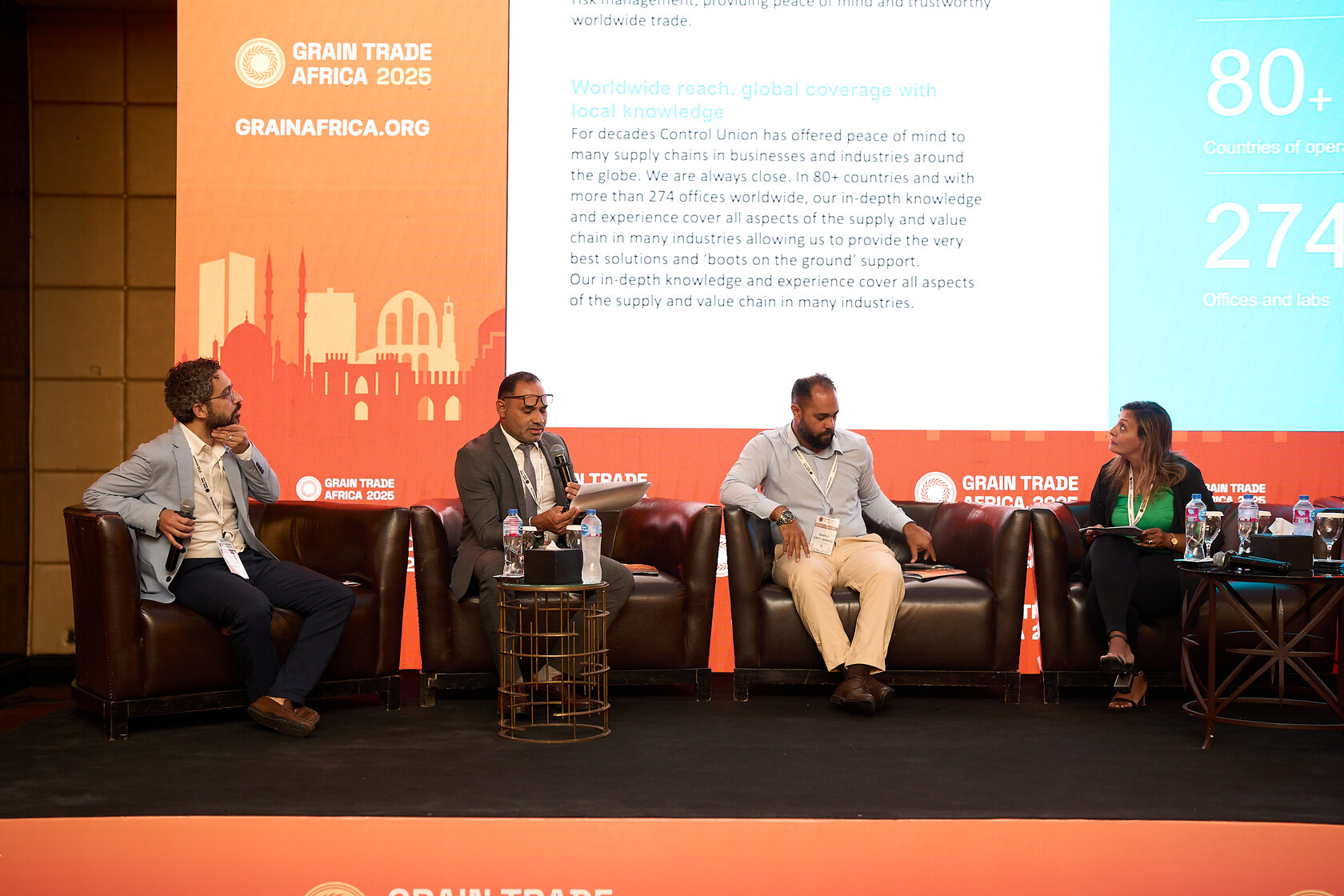
Ahmed Momtaz, representing Control Union (Egypt), underlined Africa’s vast agribusiness potential, but also warned of geopolitical risks, infrastructure bottlenecks, and climate change impacts. Control Union now offers supply chain risk management and stock monitoring solutions to strengthen agri logistics across the continent.
The Global Context — Shipping and Tariffs
Hassan Youssef, Founder and Managing Director of “Bulk Egypt (‘BE’)” for Chartering & Shipping, discussed the latest dry bulk freight trends and the effects of new U.S. trade tariffs on steel and aluminum (up to 50%). These measures, he warned, could spark a chain reaction in global shipping, raising costs across the grain logistics sector and impacting international trade flows.

Africa on the Threshold of a New Grain Era
The Grain Trade Africa 2025 forum made one thing clear: Africa is no longer just a grain consumer — it is becoming a key player in global grain trade.
Egypt is consolidating its role as a grain logistics hub, Türkiye is expanding as a regional processor, and Russia and France continue to anchor supply to Africa and the MENA region.
The continent’s next step depends on how effectively it addresses three key challenges: logistics, climate, and financing.
If these are met with innovation and cooperation, Africa’s food security could evolve from dependency to resilience — transforming the continent from a grain importer into a global trading power.