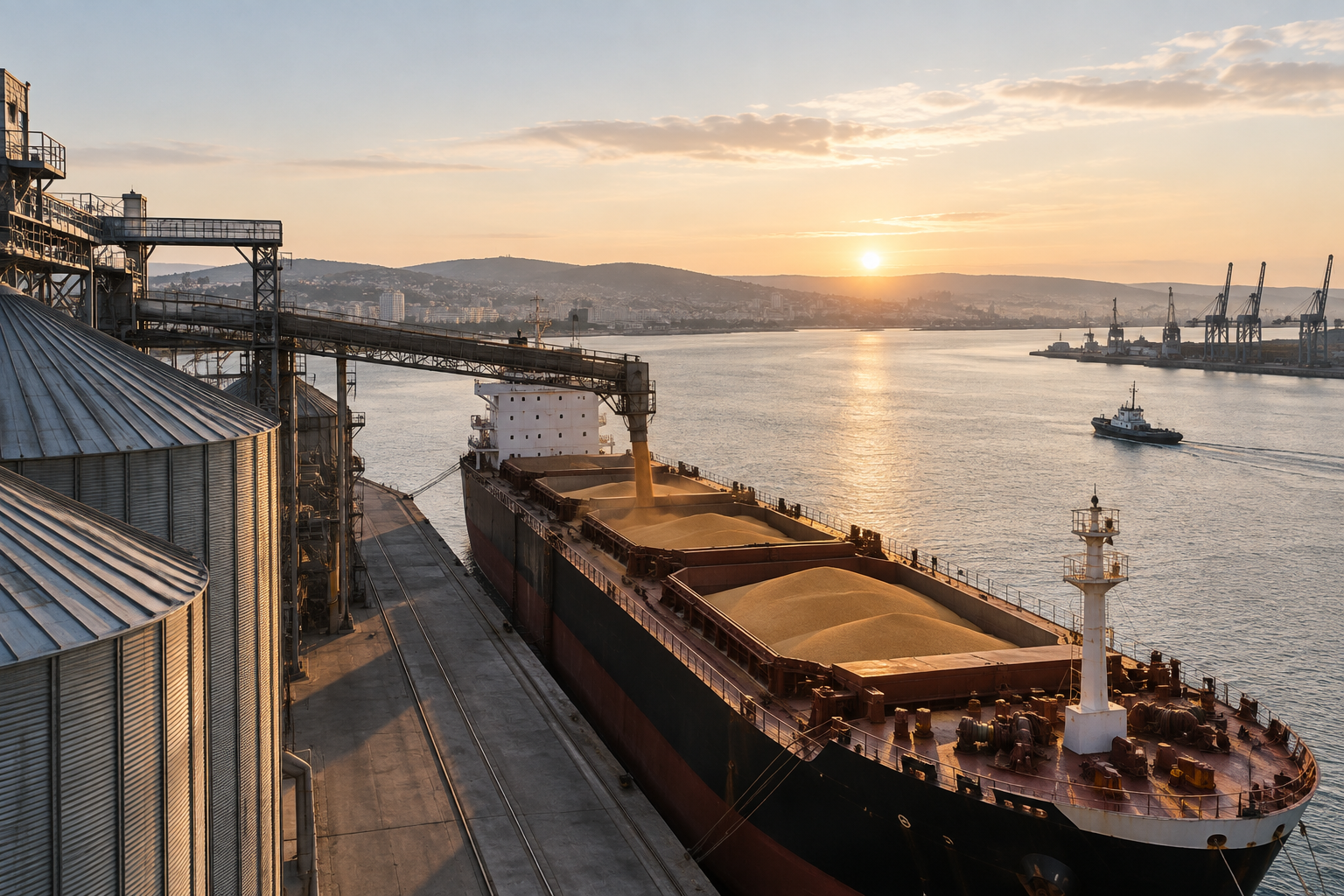
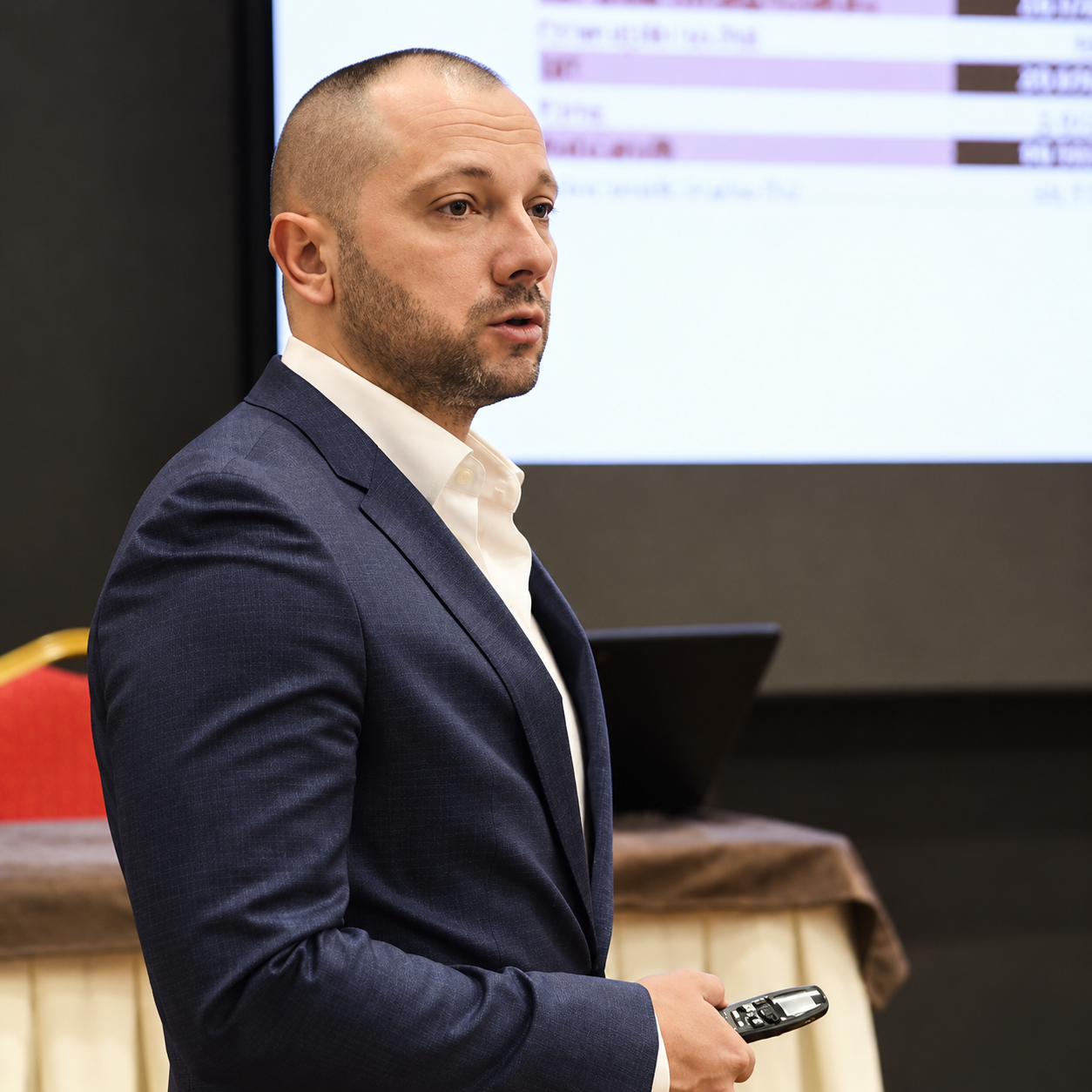
In this interview, Nemanja Vukovic, Country Manager Serbia, COFCO International Balkans doo Belgrade (Serbia), shares his perspective on the changing regional grain trade, Serbia’s position in the wider market, evolving buyer requirements, logistics and risk management. Vukovic will also address these themes at BBS Grain 2026 in Istanbul on 22 September, in the session “Export Markets: Black Sea Grain Flows in a New Trade Reality.”
A More Connected Black Sea and Balkan Market
From your perspective, what are the most important structural changes currently reshaping grain trade across the Black Sea and Balkans — and which of them do you believe will remain relevant beyond the current season?
“In my opinion, the biggest change is that the Black Sea and the Balkans are ‘closer’ than they were before, which was mostly contributed to by the situation in Ukraine. Changes in trade flows, new logistics routes and the greater role of the Danube have created a much more connected regional market.
Ukraine has changed the way goods move to the EU and other markets, while Romania and the Danube ports have gained even greater strategic importance by connecting Ukraine to the Black Sea market via Constanta. At the same time, Russian origin has become very competitive on the Black Sea market. In my opinion, what will remain even after the current geopolitical situation is the greater importance of logistics, flexibility of routes and regional comparison of origins.”
What Makes an Origin Competitive?
When international buyers compare different grain origins, what ultimately determines competitiveness today — price, quality, logistics, reliability of supply, flexibility, or something else?
“Price is still very important, but price alone is not enough. We would define competitiveness as a combination of price, quality, logistics and reliability — I mean the partner. The main challenge of the Serbian origin is that it is not classified as EU. In many situations, reliability is preferred over price. In the last few years, more attention has been paid to wheat compared to corn, and thus the sowing structure has been changed in favor of wheat. In previous years, the quality of wheat was significantly increased due to better application of agricultural techniques and certified seeds.”
“Price is still very important, but price alone is not enough.”
Where do you see Serbia’s strongest position within the wider Black Sea and Southeast European grain market, and where does it still face structural disadvantages?
“Serbia has a very good geographical position, agricultural potential and access to the Danube. Our advantage is flexibility. We are close to the markets of Romania (Constanța), Hungary, Croatia, Bosnia, North Macedonia, and Italy. Also, the long-term presence on the mentioned markets is an advantage due to the reliability of quality and relations. South Korea is a long-term buyer of Serbian corn. On the other hand, our biggest structural problem is that we do not have direct access to the sea. This means that we are dependent on logistics, i.e. the Danube, ports and other modalities such as trucks and trains.”
New Markets and Changing Buyer Priorities
Looking at the next two to three years, which importing markets or regions do you believe could become more important for Black Sea and Balkan grain suppliers, and why?
“MENA will continue to be key, but we think that sub-Saharan Africa, as well as the Eastern Mediterranean markets, should be looked at more closely. Population growth, urbanization and limited grain production in many of these countries mean that imports will continue to be a fundamental need, not just a consequence of bad harvests.
However, markets will not only seek the cheapest goods. They will increasingly look for suppliers who can provide continuity, financing, logistics and quality. This is precisely where regional companies can be interesting, not only as sellers of goods, but as partners who can organize the entire supply chain.”
The Middle East and Africa remain strategically important import markets. What is changing in the way buyers in these regions evaluate suppliers and origins?
“We think buyers today are looking a lot more at the total cost and risk, not just the nominal price. Five or ten years ago, we could relatively easily compare offers by price and quality. Today, you have to consider freight, insurance, geopolitical situation, payment terms, sanctions, logistics risk and delivery reliability. There is a desire to diversify and this creates an opportunity for the Balkans in general, because we can offer alternatives and flexibility, especially for customers who want to diversify their traditional Black Sea sources.”
Logistics and Risk Management
From your experience, where are the biggest logistical bottlenecks today — and how much can logistics determine whether an otherwise attractive grain trade actually works commercially?
“The biggest challenge is connecting the domestic market with the export center; for us, it is Constanta. For Serbia, the Danube is crucial as a major generator of volume, but at the same time it also represents a risk due to the water level, capacity, availability of barges and competition for logistics. Another problem is the availability of railways, including situations involving railway reconstruction, and the availability of trucks, especially at harvest time. Port capacities are also limited in some situations.”
With geopolitical risk, freight volatility and changing trade routes, how has the decision-making process of international grain traders changed? What has become more important than it was five years ago?
“Five years ago, traders were able to make decisions with a much greater focus on fundamentals, supply and demand, inventory and price. Today, we have to simultaneously monitor geopolitics, sanctions, logistics and even government interventions. The ability to adapt quickly is much more important today. Also, I think risk management has become more important than trying to ‘beat the market’. You cannot find a trader who always guesses the price direction. One who controls expenses in difficult times can expect success.”
“Risk management has become more important than trying to ‘beat the market’.”

From Local Agribusiness to International Commodity Trading
You have worked both as a CEO in a local agricultural business and within a global commodity company. How has that changed the way you assess markets, risks and commercial opportunities today?
“I think the combination of those two experiences gave me a much broader perspective. When you are the CEO of a local agribusiness company, you realize that cash flow, efficiency and execution are just as important as the margin itself. You can have a great deal on paper, but if you cannot, for example, finance it or physically carry out what you agreed on, then it is not a good deal.
Working in a multinational trading company gives you a much broader perspective of how global flows are formed, how large companies manage risk and how the local market fits into the global picture. Today, therefore, you try to look at the market from both angles: local and global. But I find people and the team the most important part of any organization. Good teammates make you stronger.”
Meet Nemanja Vukovic at BBS Grain 2026
Nemanja Vukovic, Country Manager Serbia, COFCO International Balkans doo Belgrade (Serbia), will speak at BBS Grain 2026 in Istanbul on 22 September 2026.
He will take part in the session “Export Markets: Black Sea Grain Flows in a New Trade Reality”, speaking about how Serbia is adapting to changing regional grain flows, with a focus on export competitiveness and new market opportunities.
Join the discussion at BBS Grain 2026 in Istanbul.
He will take part in the session “Export Markets: Black Sea Grain Flows in a New Trade Reality”, speaking about how Serbia is adapting to changing regional grain flows, with a focus on export competitiveness and new market opportunities.
Join the discussion at BBS Grain 2026 in Istanbul.