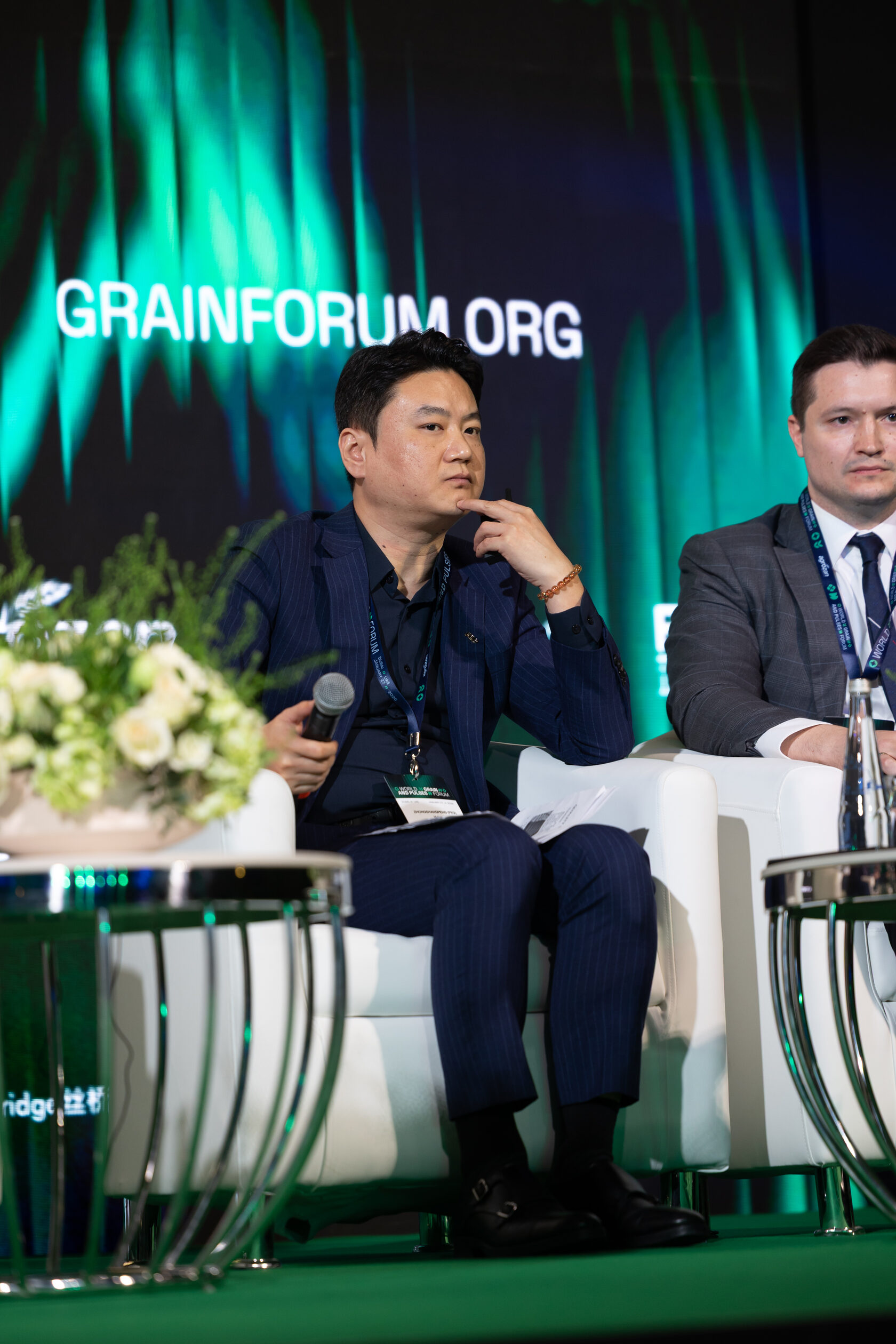
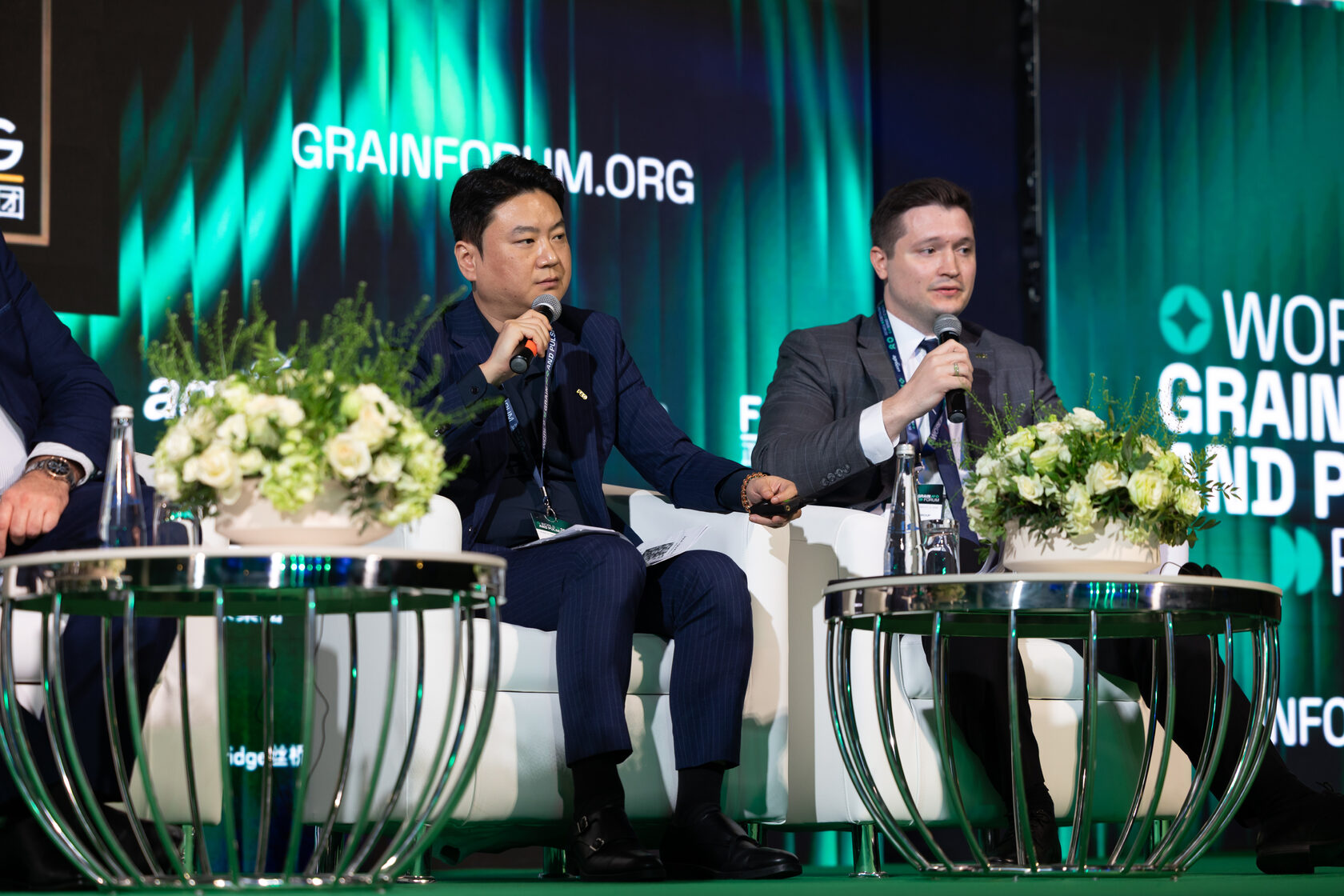
At World Grain & Pulses Forum 2026 in Dubai, Yuan Zheng, Grain Sales Director of Zhongshangpeng (FEG), delivered a detailed analysis of the global pulse market with a specific focus on China — currently the world’s largest grain importer.
China’s role in global grain trade
Since 2014, China has remained the largest grain importer globally in both volume and value. In 2024 alone, China’s net imports of major agricultural products reached approximately USD 215 billion. Soybeans continue to dominate the import structure, exceeding 100 million tons annually, while imports of wheat, corn, barley, and pulses are strategically diversified to support national food security.
China’s long-term strategy prioritizes diversification of suppliers and product categories, strengthening the role of international trade while reducing dependence on individual origins.
Peas: a rapidly evolving market
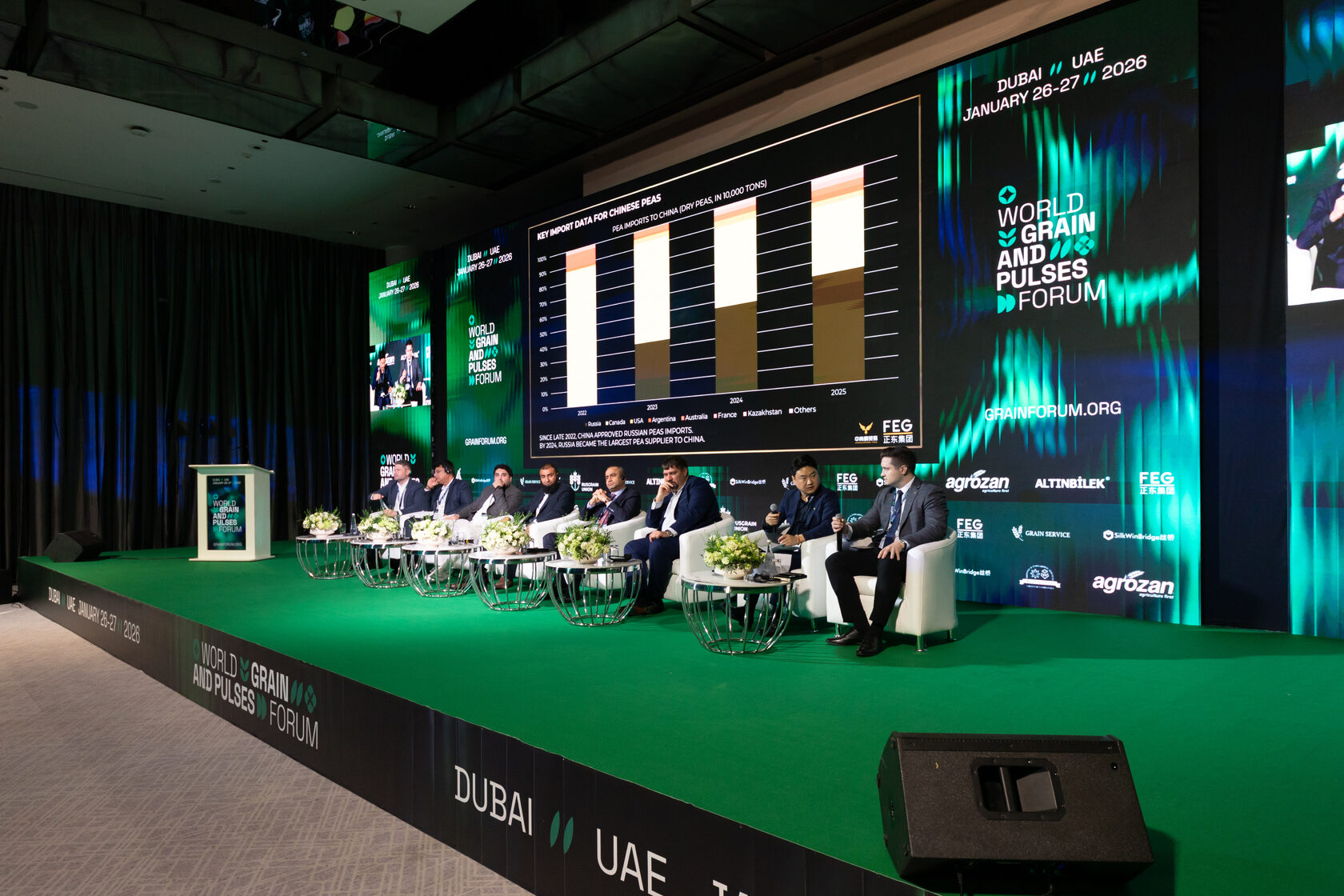
One of the key focuses of the presentation was the Chinese pea market. Since late 2022, China has approved imports of Russian peas, and by 2024 Russia became the largest supplier. This shift significantly altered market dynamics, especially after political and trade tensions affected traditional suppliers.
In 2025, China imposed a 100% tariff on certain Canadian imports, including dry peas, triggering sharp price volatility. Pea prices fluctuated dramatically — rising from RMB 2,600 per ton to peaks above RMB 4,500 before falling back to around RMB 2,500.
Despite increased volumes from Russia, Russian peas cannot fully replace Canadian peas in specific applications such as protein processing and vermicelli production, keeping quality differentiation a critical pricing factor.
Applications and quality requirements
Peas are widely used in China across food processing, animal feed, aquaculture, and even brewing. Their protein content (22–25%) makes them a partial substitute for soybean meal in feed formulations, while higher-quality peas are essential for food-grade applications.
Yuan Zheng emphasized that quality is a decisive factor for market access. High-quality peas reduce processing costs and can be used directly, while lower-quality peas generate significant waste — up to 18% — lowering overall procurement efficiency.
Key procurement requirements include:
- Moisture ≤ 13%
- Impurities ≤ 2%
- Broken rate ≤ 6%
- Protein ≥ 21%
- Non-GMO and toxin-free
Why these insights matter
The presentation highlighted how trade policy, logistics, quality standards, and geopolitical factors directly influence pricing and supplier competitiveness in China’s pulse market. These insights, shared in a closed professional setting, offer global exporters a rare opportunity to understand what truly drives demand and decision-making in one of the world’s most important import markets.
Next Forum — World Grain & Pulses Forum, 2027, Dubai
📍 UAE, Dubai | March 15-17, 2027
Join one of the largest international forums for the grain and pulses industry, bringing together over 1,100 participants from 55+ countries — key players in grain trade, logistics, and agribusiness.
Discover the latest trends shaping global grain markets, pulses trade, and container logistics — only at the World Grain & Pulses Forum 2027 in Dubai.
Discover the latest trends shaping global grain markets, pulses trade, and container logistics — only at the World Grain & Pulses Forum 2027 in Dubai.