Black Sea Grain Markets in 2026: Oversupply, Price Pressure and Shifting Trade Flows
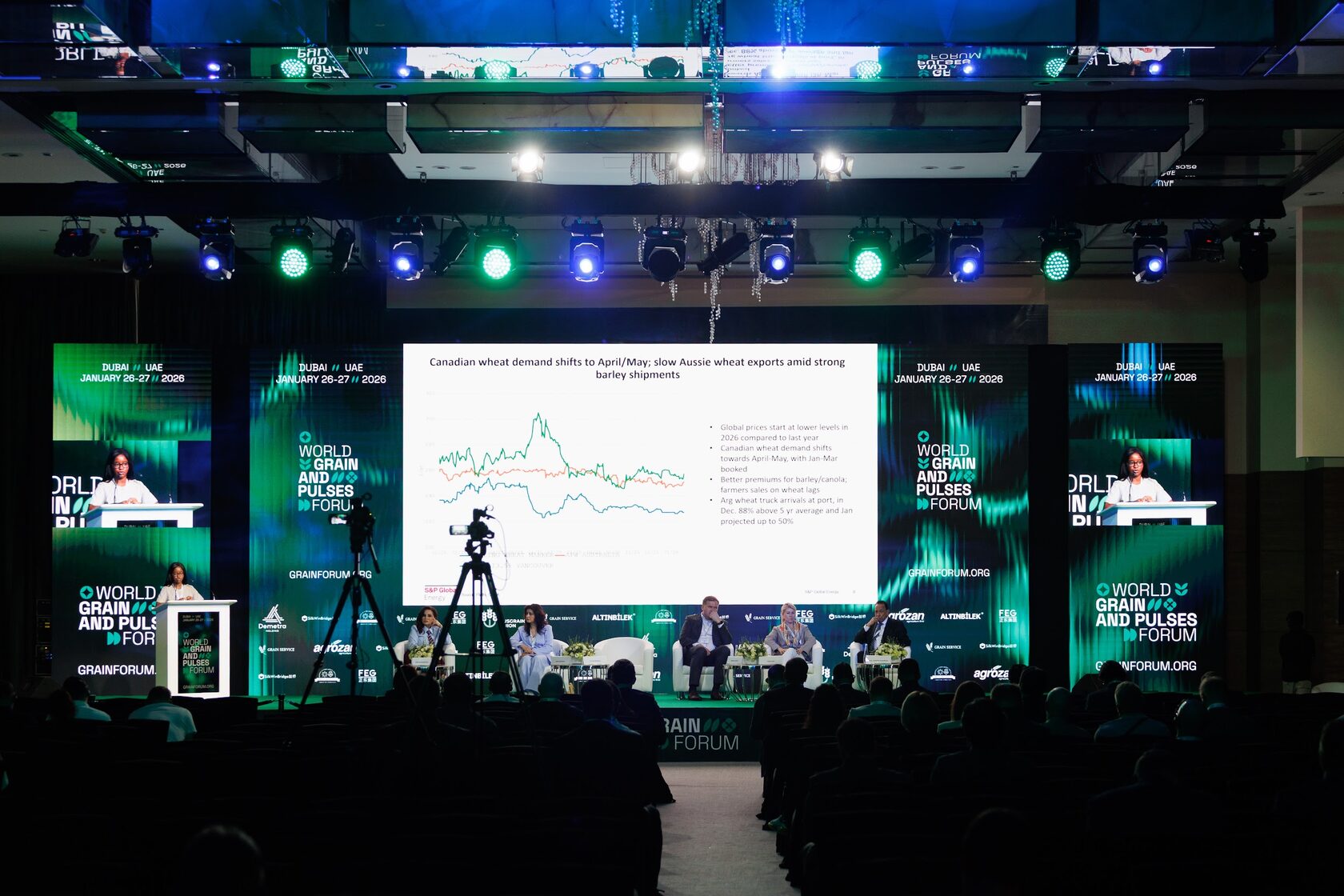
Global grain markets are entering 2026 under significant pressure, shaped by oversupply, weak demand, and structural shifts in trade flows. One of the most comprehensive market overviews at the World Grain & Pulses Forum 2026 focused on Black Sea pricing dynamics and their global implications.
The analysis highlighted how wheat and corn prices are evolving across key export regions — from the Black Sea and Europe to Australia and the Americas — and what market participants should watch in the months ahead.
The analysis highlighted how wheat and corn prices are evolving across key export regions — from the Black Sea and Europe to Australia and the Americas — and what market participants should watch in the months ahead.
Low Prices and Oversupply Define the Start of 2026
Global wheat prices are entering 2026 at notably lower levels compared to the previous year. Major benchmarks across the Black Sea, Europe, Australia, and North America indicate a market weighed down by ample supply and subdued demand.
Despite seasonal factors, prices have remained range-bound since late 2025, reflecting:
Even supportive factors such as near-zero export taxes in certain regions have had limited impact on price recovery.
- weak buying interest,
- quality concerns in some origins,
- logistical challenges slowing export flows.
Even supportive factors such as near-zero export taxes in certain regions have had limited impact on price recovery.
Black Sea: Stable Prices Amid Structural Constraints
The Black Sea remains the most influential export region for global wheat pricing. However, prices have shown limited movement due to:
While occasional demand pulses appear, especially around religious or seasonal stock rebuilding periods, they have not been sufficient to shift the broader market trend.
- delayed harvests early in the season,
- logistical bottlenecks and slow vessel turnaround,
- subdued demand from key importing countries.
While occasional demand pulses appear, especially around religious or seasonal stock rebuilding periods, they have not been sufficient to shift the broader market trend.

Corn Markets: Record Supply and Bearish Outlook
Global corn supply has reached record levels, setting the stage for continued downward pressure on prices. Increased acreage and favorable production prospects in several exporting countries are reinforcing bearish sentiment for the new crop.
At the same time, higher corn prices in parts of the Black Sea region have driven wheat into animal feed rations, further reshaping demand patterns across grains.
At the same time, higher corn prices in parts of the Black Sea region have driven wheat into animal feed rations, further reshaping demand patterns across grains.
Shifting Demand Across Regions
Trade flows are increasingly defined by price competitiveness and logistics:
Meanwhile, logistical constraints — including port congestion and transit delays — are becoming as influential as price itself.
- Southeast Asian buyers are actively sourcing feed wheat from Argentina and Australia due to favorable pricing.
- Ukrainian wheat shipments to Asia have declined, while exports to Egypt remain significant.
- Russian wheat continues to dominate demand in the MENA region, although Far East markets remain more competitive.
Meanwhile, logistical constraints — including port congestion and transit delays — are becoming as influential as price itself.
Key Market Drivers to Watch in 2026
The outlook for global wheat prices will be shaped by a balance of opposing forces:
Bullish factors
Swing factors
Bullish factors
- winter planting weather risks,
- weak farmer selling due to negative margins,
- logistical disruptions and port strikes.
Swing factors
- exchange rate movements,
- geopolitical developments,
- trade policy negotiations,
- economic stimulus measures in major importing countries.
Bearish factors
- global oversupply,
- intense competition among exporters,
- sustained low-priced demand through the end of the season.
Why These Insights Matter
What makes these insights particularly valuable is the way they connect price benchmarks with real trade behavior — logistics, demand timing, and regional substitution effects. These dynamics are rarely visible in headline market data but directly influence contract decisions, sourcing strategies, and risk management.
This is exactly the type of market intelligence discussed behind closed doors at industry forums — where participants seek not just price direction, but context.
This is exactly the type of market intelligence discussed behind closed doors at industry forums — where participants seek not just price direction, but context.
Next Forum — World Grain & Pulses Forum, 2027, Dubai
📍 UAE, Dubai | March 15-17, 2027
Join one of the largest international forums for the grain and pulses industry, bringing together over 1,100 participants from 55+ countries — key players in grain trade, logistics, and agribusiness.
Discover the latest trends shaping global grain markets, pulses trade, and container logistics — only at the World Grain & Pulses Forum 2027 in Dubai.
Discover the latest trends shaping global grain markets, pulses trade, and container logistics — only at the World Grain & Pulses Forum 2027 in Dubai.